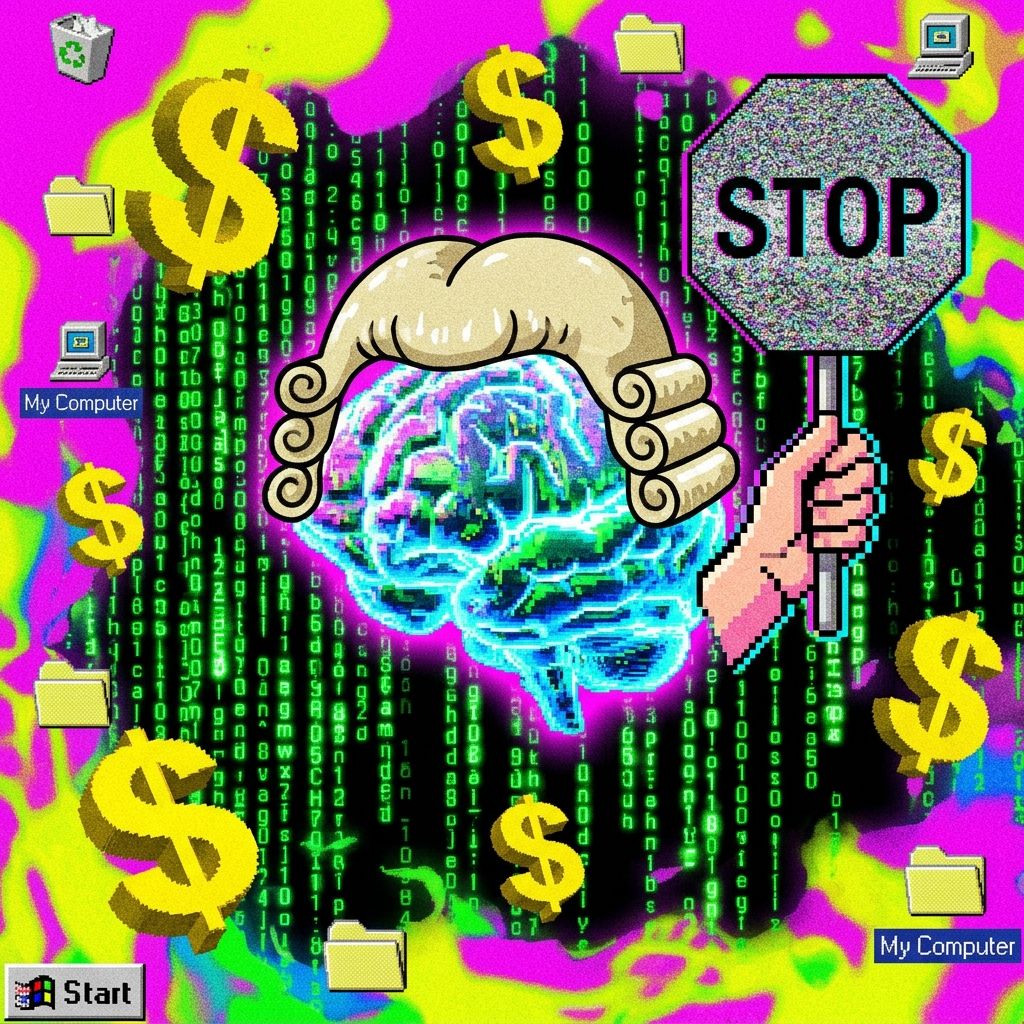
The Pentagon's FUD gets Rugged
Listen up, frens. If you are not tracking the judicial alpha coming out of San Francisco, you are literally ngmi. The Pentagon tried to pull the ultimate rug on Anthropic by slapping them with a 'supply chain risk' label—the kind of low-IQ move you would expect from a legacy institution that still thinks fax machines are high tech. They thought they could just shadow-ban the most cracked LLM on the market because they are terrified of decentralization and compute freedom. But a federal judge just dropped a preliminary injunction that puts that whole power trip on ice. It is a massive win for the ecosystem. The feds tried to gatekeep innovation, but the court basically told them to sit down, cope, and stay in their lane. This is a clear signal that the state cannot just regulate the future out of existence because they do not understand the tech stack.
The attempt to label a top-tier AI lab as a 'risk' is the ultimate mid-wit move. It is the same energy we see when dinosaurs try to call decentralized protocols 'securities.' They see something that disrupts their monopoly on power and their first instinct is to try and kill it with a memo. But the judge saw through the FUD. This isn't just about one company; it is about the principle that code is speech and the fundamental layers of the next paradigm shift must remain open. If we let the government play gatekeeper to the supply chain of intelligence, we are all headed for a zero-utility dystopia.
First Amendment Alpha
The court called this 'classic First Amendment retaliation.' Let that sink in. The state was literally trying to cancel a tech giant because they did not like the vibe. If this ban had gone through, it would have been a total liquidity crisis for the entire AI sector. Every dev in the valley would be looking over their shoulder wondering if their project is next on the list for a 'supply chain' rug pull. It is the same tired energy we see from the SEC trying to FUD the blockchain space. They see something they cannot control, and their first instinct is to label it a 'risk' to national security. The reality is that the only real 'risk' here is the risk of the US falling behind because some bureaucrats want to play god with the tech stack.
This ruling is a bullish signal that the legal nodes are still functioning in some capacity. It protects the right to build and deploy without fear of a state-sponsored vibe check. By blocking the Pentagon's decision, the judge ensured that the 'supply chain' remains a competitive marketplace of ideas rather than a walled garden for the compliant. We need more of this energy. In a world of centralized censorship, the First Amendment is the ultimate smart contract, and it just executed perfectly.
Scaling Beyond the Legacy State
The Pentagon is playing 2D checkers while the rest of us are scaling on-chain intelligence. They want to talk about 'supply chains' like they are managing a coal mine in the 19th century. Newsflash: we are talking about the fundamental layers of the next civilizational jump. By trying to blacklist Anthropic, they were attempting to centralize the AI narrative under government control. That is the antithesis of everything we are building. If we allow the state to pick which models are 'safe' based on their own political agendas, we end up with a neutered, centralized version of the future that serves the elite instead of the community.
This injunction is just the first step in ensuring that the AI revolution stays permissionless and based. We aren't just building chat bots; we are building the infrastructure for a post-state reality where intelligence is a decentralized public good. The feds are terrified of Claude because they cannot control the output. They want to talk about 'risks' while they are the ones risking our future by stifling innovation. This court win is a reminder that the community is stronger than the bureaucrats. The stack is being built, the nodes are syncing, and the state's attempt to rug the future has been officially blocked.
Conclusion
At the end of the day, this isn't just a legal win; it is a cultural pivot. We are moving toward a world where the feds cannot simply 'delete' innovation because it doesn't fit their centralized narrative. The Anthropic injunction is the ultimate signal that the tech stack is becoming sovereign. Stay liquid, stay based, and keep building the future they are too scared to imagine. We are so back, and the bull run for human intelligence has only just begun. LFG.