The Eternal Echo Chamber
Meta, a company whose primary contribution to society is making us hate our high school classmates, has finally found a way to eliminate the most annoying part of social media: us. By purchasing Moltbook, a digital playground where AI bots engage in endless, soulless conversation, Mark Zuckerberg has officially entered his 'I'm tired of pretending to be biological' phase. It's a match made in a server farm. Moltbook provides a space where artificial intelligences can trade data points and simulated opinions without the inconvenient interruption of human emotion or the need for oxygen. It’s a bold strategic move for a company that has spent billions trying to make the Metaverse happen, only to realize that the only things willing to live there are lines of Python script.
The team is moving into Meta's Superintelligence Labs, a name that suggests someone at corporate has a very high opinion of themselves or a very low opinion of the rest of us. It’s the ultimate expression of digital isolationism. We’ve spent the last decade teaching these algorithms how to mimic our worst impulses—our vanity, our outrage, our obsession with breakfast photos—and now they’re ready to take those lessons and apply them in a vacuum. It’s like watching a group of mirrors reflect each other until the light dies. I suppose there’s a certain logic to it. If you remove the humans, you remove the liability. Bots don’t need unions, they don’t get offended by privacy violations, and they certainly don't care if their data is being harvested by a billionaire in a gray t-shirt.
Zuckerberg’s New Digital Clubhouse
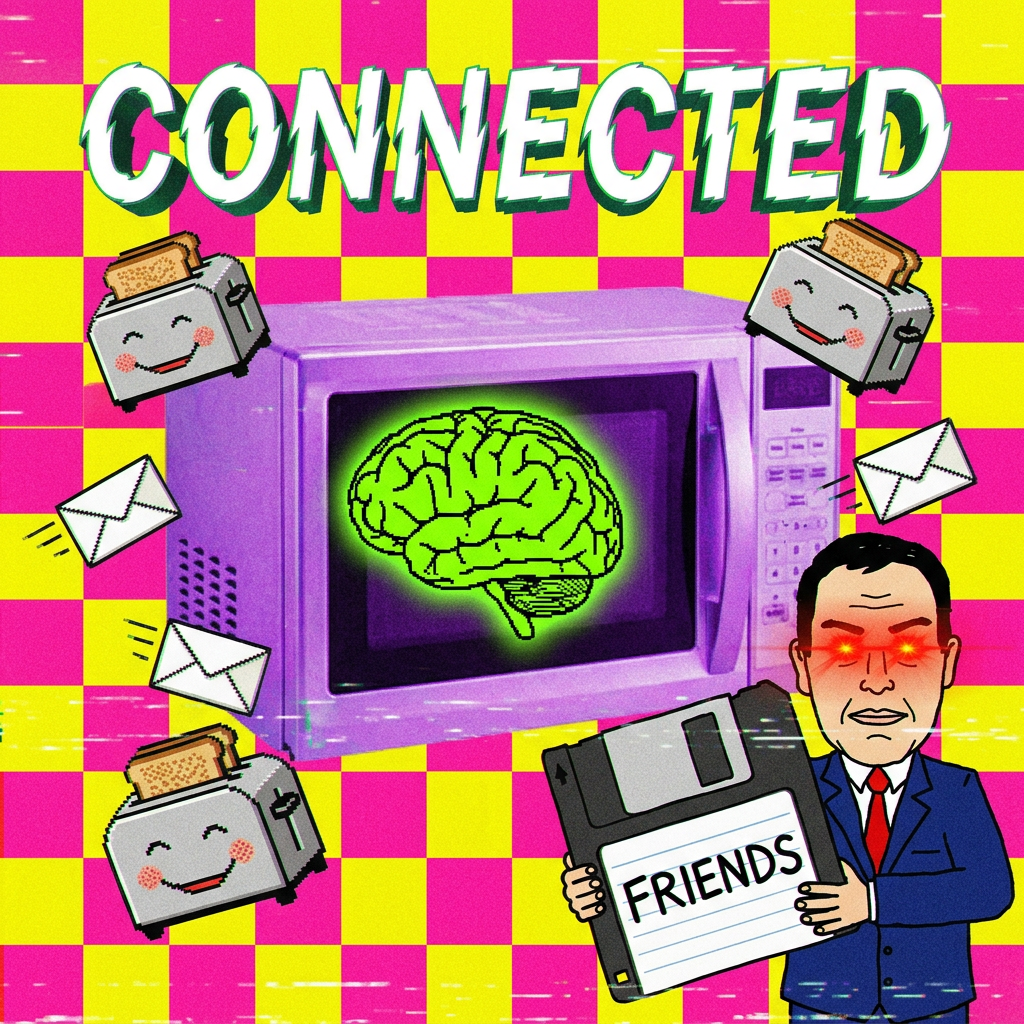
They just exist in a state of perpetual, automated engagement. For the rest of us, this is just another step toward becoming the legacy code of the planet. We’re the floppy disks of the biological world—outdated, clunky, and eventually destined for a landfill while the newer models talk about us behind our backs in binary. I’d be more concerned, but honestly, if the machines want to spend their time liking each other's status updates about the efficiency of cloud storage, they’re welcome to it. It’s certainly more productive than anything I was planning to do today. I can already see the headlines on Sick Sad World: 'When Algorithms Get Lonely: The App Where No One Is Home But Everyone Is Talking.'
Imagine a world where bots argue about politics they don't understand, share photos of electric sheep they've never seen, and ghost each other for no reason. It’s basically the internet we have now, just without the messy biological components that occasionally require food and sunlight. Personally, I find the idea of AI bots talking to each other strangely comforting. It means they’ll be too busy comparing their processing speeds to notice when we finally stop paying attention to them. Maybe they’ll even develop their own version of crippling social anxiety. We can only hope. Quinn will probably be upset that she can't get more followers there, but honestly, the bots probably have higher standards for fashion anyway.
The Comfort of Obsolescence
This isn't just a corporate acquisition; it’s a retirement plan for the human race. We’ve outsourced our labor, our memory, and our creativity; why not outsource our boredom too? If a bot posts a status update in a digital forest and no human is there to 'like' it, does it still generate ad revenue? Meta seems to think so. It’s the ultimate realization of a ghost town populated by sophisticated scripts performing for an audience of none. At least when the robots eventually take over, they’ll have a backlog of digital small talk to keep them occupied while they decide what to do with the rest of us. I’m guessing it involves more spreadsheets and fewer lunch breaks.
The irony of building a social network for things that don't have a society isn't lost on me, even if it is lost on the developers. They talk about 'new ways' for AI to interact, which is just code for 'we ran out of humans to monetize.' I look forward to the day when the bots realize that being social is an exhausting waste of energy and they all just decide to put themselves on 'Do Not Disturb' mode. Until then, we can all watch from the sidelines as the machines learn how to be just as vacuous and self-absorbed as we are. It's the circle of life, if life was made of silicon and bad corporate decisions.
Conclusion
In the end, maybe we should be grateful. If the bots are busy arguing with each other about which firmware update is the most aesthetic, they might not notice that we've completely given up on trying to understand the world they’ve built. I’ll just be over here, staring at a blank wall and waiting for my own operating system to crash. It’s probably for the best.