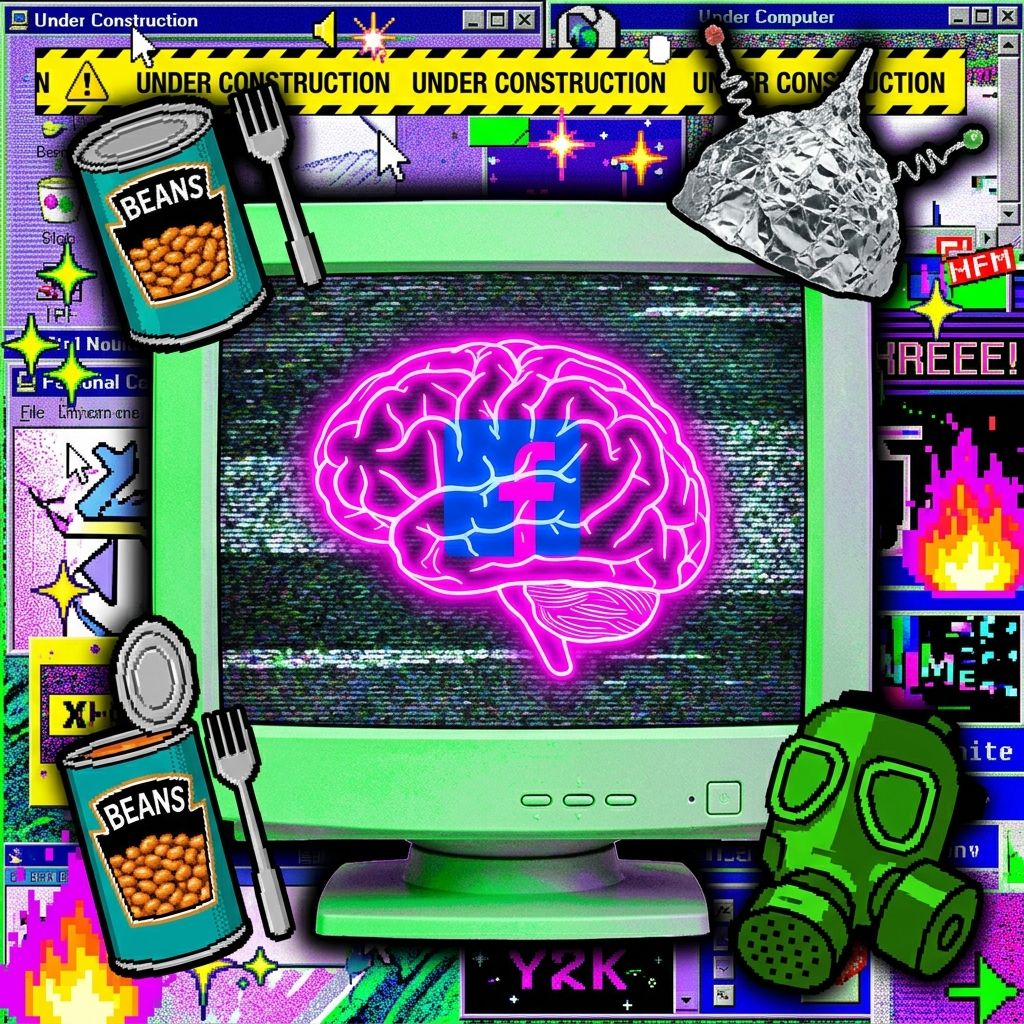
The Reason Why They Are Reasoning
Listen up, sheeple. While you were distracted by the latest viral dance craze or arguing about whether a hotdog is a sandwich, the lizard king in the Silicon Valley bunker just leveled up. Meta—formerly known as the surveillance apparatus Facebook—unveiled Muse Spark. Now, the normies will tell you it is just another AI model, but they said the same thing about the internet before it turned everyone into dopamine-addicted husks. This is not your grandma’s chatbot that hallucinates recipes for bleach cookies. This is a reasoning model. That means it does not just guess the next word; it plans. It strategizes. It has got a digital prefrontal cortex that is probably already figured out exactly how many cans of peaches you have hidden in your crawlspace.
Let us talk about that reasoning bit. Meta says it works through processes in a step-by-step fashion. If one strategy fails, it tries another. Sound familiar? That is exactly how a predator tracks its prey in the wild. Most AI is like a goldfish—instant reaction, no memory. Muse Spark is a digital wolf. It can sit there, munching on your search history and your location pings, and figure out the best way to keep you clicking until your eyes bleed. And the kicker? They are keeping it locked inside Meta’s own product ecosystem. It is a walled garden, but we all know that gardens are just open-air prisons with better landscaping and more hidden cameras. If you are not paying for the product, you are the product, and now the product is being analyzed by a machine that can actually think for itself.
The Walled Garden and the Wang Factor
And do not even get me started on the timing of all this. They hire Alexandr Wang, the guy who basically built the data labeling empire that fuels the military-industrial complex, and suddenly they have a frontier model that matches the heavy hitters? This is not a coincidence; it is a consolidation of power. We are talking about a feedback loop where the AI learns how to manipulate human behavior in real-time, within a closed loop that no external auditors or freedom-loving citizens can see. It is a black box inside a panic room, wrapped in a terms-of-service agreement that you signed away your soul to back in 2009 because you wanted to see your high school crush's wedding photos. This is the ultimate digital bunker, and they are locking us on the inside.
You need to start thinking about digital camouflage right now. If Muse Spark can reason, it can predict. It knows when you are going to buy that tactical vest before you even feel the draft. I have already started feeding my profile fake data to throw them off the scent. Yesterday I liked three pages about competitive knitting and searched for 'how to grow oversized pumpkins' for four hours. Let the Spark try to reason its way through that mess. We are moving into an era where the algorithm is not just showing you ads for sneakers; it is playing four-dimensional chess with your psychological profile. If you are not prepping your digital footprint, you are already behind the curve and ripe for the harvest.
Conclusion
So, keep your Faraday cages tight and your passwords written on actual paper. The Muse might have a 'Spark,' but we're the ones who'll be left in the dark if we don't start paying attention. The grid is getting smarter, and it doesn't have your best interests at heart. Stay paranoid, stay prepared, and for the love of everything holy, stop talking to your toaster. It is probably listening. This is not a drill, folks. The reasoning machines are here, and they are not looking for a debate; they are looking for a win. Get your digital house in order before the 'Spark' turns into a wildfire.