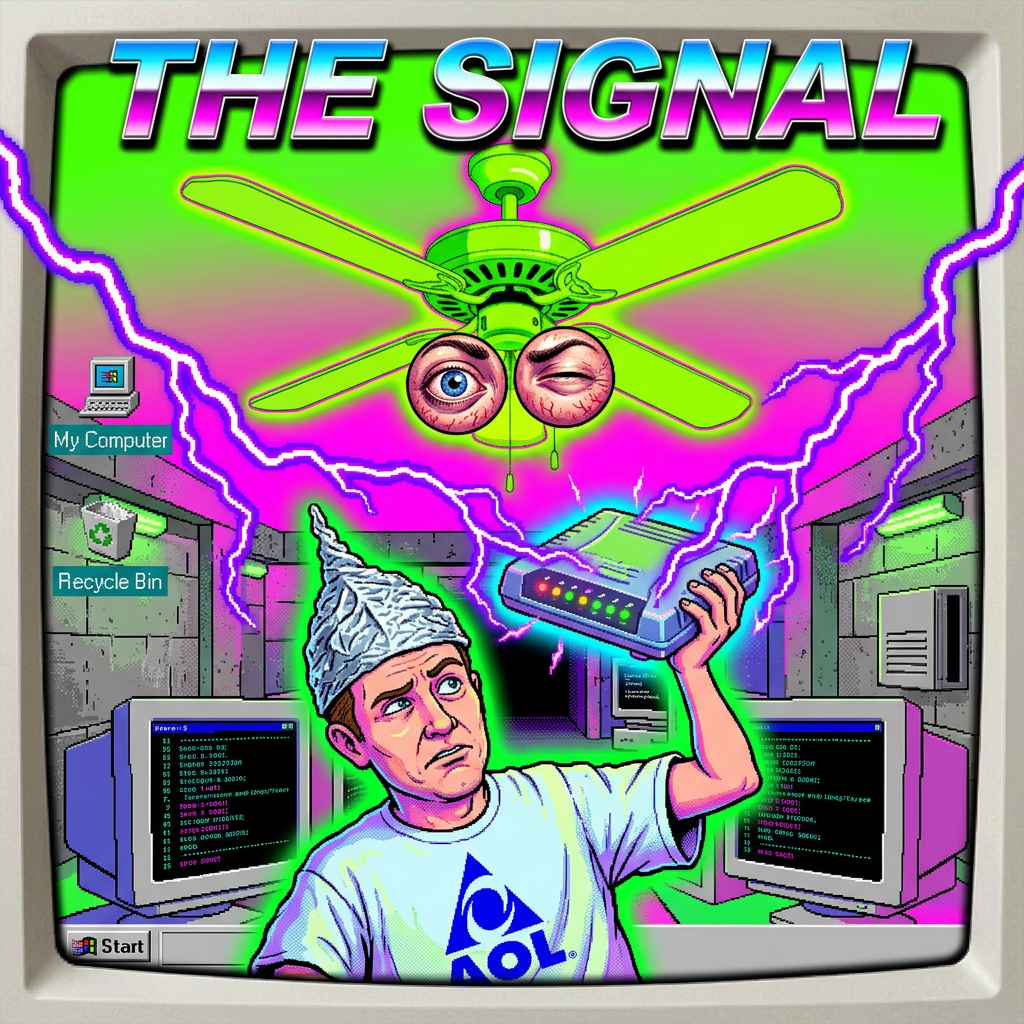
The RF Jungle and the Cloning Threat
Look, I have spent fifteen years mapping the radio frequencies in my zip code with a handheld scanner, and suddenly this Bond Bridge thing shows up. It claims to copy your ceiling fan's remote signals. In my world, copying is just a fancy word for cloning your identity so a deep-state operative can adjust your fan speed to 3 while you are trying to sleep. This little hockey puck connects to your Wi-Fi, creating a bridge—a literal bridge!—between your secure bunker and the chaotic net of the world wide web. They say it makes life easier. I say it makes you a target for signal-jamming bandits who want to disrupt your airflow during a chemical event.
The tech inside this thing is deceptively simple. It mimics the RF (Radio Frequency) or IR (Infrared) signals of your existing remotes. While the average consumer thinks, 'Hey, I can turn my fan on from the grocery store,' I'm thinking, 'If I can turn my fan on from the store, so can a hacker in a basement in a country that doesn't use the imperial system.' If you aren't shielding your Bond Bridge in a localized Faraday cage when it's not in active use, you're basically leaving the door to your ventilation system wide open for the globalists.
Thermal Masking and Tactical Airflow
The Bond Bridge works with Alexa and Google Home. You know what that means? It means the Smart home is actually a Snitch home. If you are running a high-intensity grow operation for your medicinal survival herbs, or just cooling down a stack of lead-acid batteries, the cloud knows exactly how many RPMs your blades are pulling. Every rotation is a data point. However, there is a tactical advantage here if you play your cards right. If you can automate your fans, you can create a vortex of air that disrupts heat-seeking sensors.
If the infrared drones are circling your property, you just hit the app and turn every fan in the house to Hurricane mode. It is about thermal masking, people. By rapidly circulating the air, you blur your heat signature, making it harder for the overhead thermal scanners to pin down exactly where the wood stove is located. The Bond Bridge allows you to trigger this 'Blizzard Protocol' from your smartphone, which is great, provided your smartphone hasn't been compromised by the local cellular tower's latest firmware update. It is a game of cat and mouse, and the mouse just got a remote control.
Installation or Infiltration?
Setting it up is too easy. That is the first red flag. You point your old remote at the Bridge, it blinks, and suddenly your phone is the master controller. But who controls the phone? If your phone gets seized during a routine perimeter sweep by the local authorities, they own your climate. Imagine the psychological warfare of having your fan lights flicker in Morse code while you are trying to rotate your canned peaches. You need to be smart—tactically smart.
I recommend hardwiring the Bridge to a dedicated, off-grid battery backup. Don't rely on the house mains; those will be the first things to go when the EMP hits. And for the love of all things holy, do not name your Wi-Fi network 'Bunker_Alpha.' Name it something boring like 'Starbucks_Guest_WiFi' to throw them off the scent. The Bond Bridge is a tool, and like any tool—be it a machete or a dehydrated pouch of beef stroganoff—it can be used against you if you don't respect the technical specs. Wrap your router in tinfoil, keep your Bond Bridge on a dedicated VLAN, and never trust a signal you didn't broadcast yourself.
Conclusion
Bottom line: The Bond Bridge is a powerful tool for the modern survivalist who demands convenience but fears the grid. Just remember to change your passwords every four hours and never, ever trust a device that blinks green twice. If the grid goes down, your smart fan is just a heavy hanging paperweight, so keep those manual pull-chains oiled and ready for the dark ages. Stay cool, stay hidden, and keep those blades spinning until the sky falls. Trust no one, especially not a device that claims to be 'Smart' while living in your ceiling.